Work in progress
Preface
These are the most significant wine regions of France (the type of wine is indicated in parenthesis):
- Champagne (sparkling)
- Alsace (white)
- Loire (white)
- Burgundy (white & red)
- Beaujolais (red)
- Bordeaux (red, but also sweet and white)
- Rhône (red & white)
- Provence (rosé)
- Languedoc-Roussillon (red)
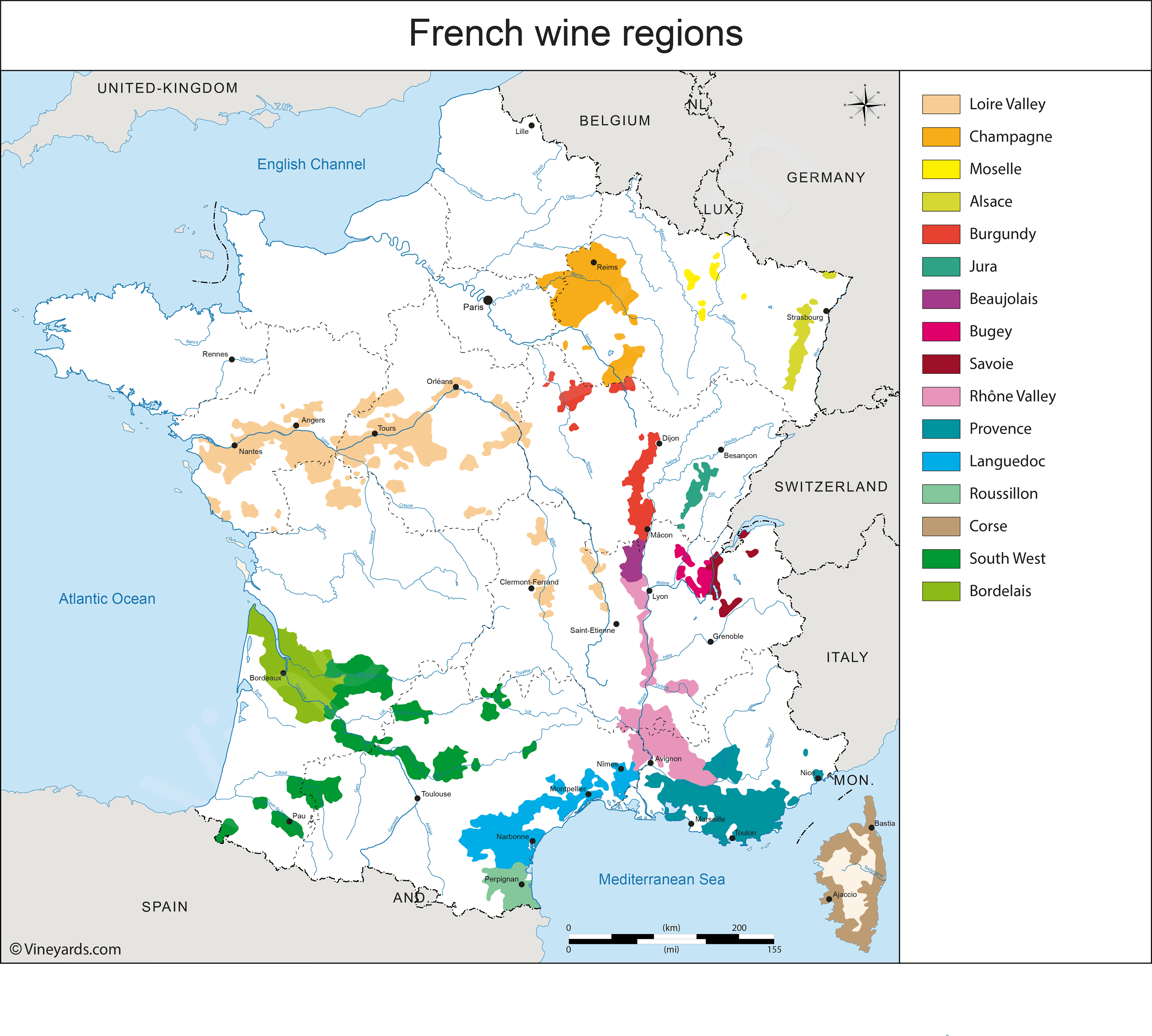
In this wine tasting event, we will taste wine from the most prestigious wine Regions, and the most prestigious appellations therein:
We will taste wines from the following regions:
- 2x Burgundy
- 2x Rhône
- 2x Bordeaux
We will learn:
- Where wine gets its taste from
- What the characteristics of the wines from these regions are
- How to buy Wine in these regions
But before we throw pearls to swine, let us first learn the very basics of wine tasting.
And if you learn the most of all participants, there will be a price for you—at the end of the tasting, there will be a quiz.
Basic Wine Tasting
From the time the grape starts growing until the wine is poured into your glass, many factors influence the final taste of the wine. Generally speaking, these factors tend to be grouped into three categories that each correspond to a stage in the life of the wine:
Primary Aromas
| Source/Process | Aroma Family | Examples |
|---|---|---|
| Grape | Citrus Fruit | Lemon, Lime, Orange, Grapefruit |
| Grape | Red Berry Fruit | Strawberry, Raspberry, Red Currant |
| Grape | Black Berry Fruit | Blackberry, Black Currant, Blueberry |
| Grape | Stone Fruit | Peach, Apricot, Plum |
| Grape | Tropical Fruit | Pineapple, Mango, Banana |
| Grape | Tree Fruit | Apple, Pear, Quince |
| Grape | Floral | Rose, Violet, Acacia, Elderflower, Jasmine, Orange Blossom |
| Grape | Herbal | Mint, Eucalyptus, Thyme, Basil, Fennel, Dill, Lavender |
| Grape | Vegetal | Bell Pepper, Grass, Tomato Leaf, Asparagus, Olive, Beetroot |
Secondary Aromas
These aromas develop during the winemaking process, primarily through fermentation and due to the influence of oak barrels.
| Source/Process | Aroma Family | Examples |
|---|---|---|
| Fermentation (Yeast) | Yeasty/Bready | Bread, Toast, Biscuit, Brioche, Cheese Rind, Yogurt |
| Fermentation (Yeast) | Nutty | Nut, Butter, Cream |
| Oak | Woody/Spicy | Vanilla, Coconut, Smoke, Clove, Cedar, Sawdust, Dill, Pencil Shavings |
| Toasting (of Oak) | Roasted/Sweet | Coffee, Chocolate, Caramel, Toast, Spice |
| Malolactic Fermentation | Creamy | Butter, Cream, Yogurt |
Tertiary Aromas
These aromas develop as the wine matures in the bottle or in oak barrels over an extended period of time.
| Source/Process | Aroma Family | Examples |
|---|---|---|
| Bottle Age | Dried Fruit | Fig, Prune, Raisin |
| Bottle Age | Nutty | Walnut, Almond, Hazelnut |
| Bottle Age | Earthy | Mushroom, Forest Floor |
| Bottle Age | Animal/Other | Leather, Tobacco, Game, Meat, Soy Sauce, Balsamic, Petrol, Wax |
| Bottle Age | Spicy | Cinnamon, Nutmeg, Clove |
| Bottle Age | Sweet | Honey |
| Oxidative Age | Oxidized | Nut, Caramel, Toffee, Coffee, Chocolate, Sherry, Almond |
Let us put this to practice!
Bourgogne (Burgundy)
Three major regions:
- Chablis: white
- Mâconnais: white
- Côte D’or: white & red
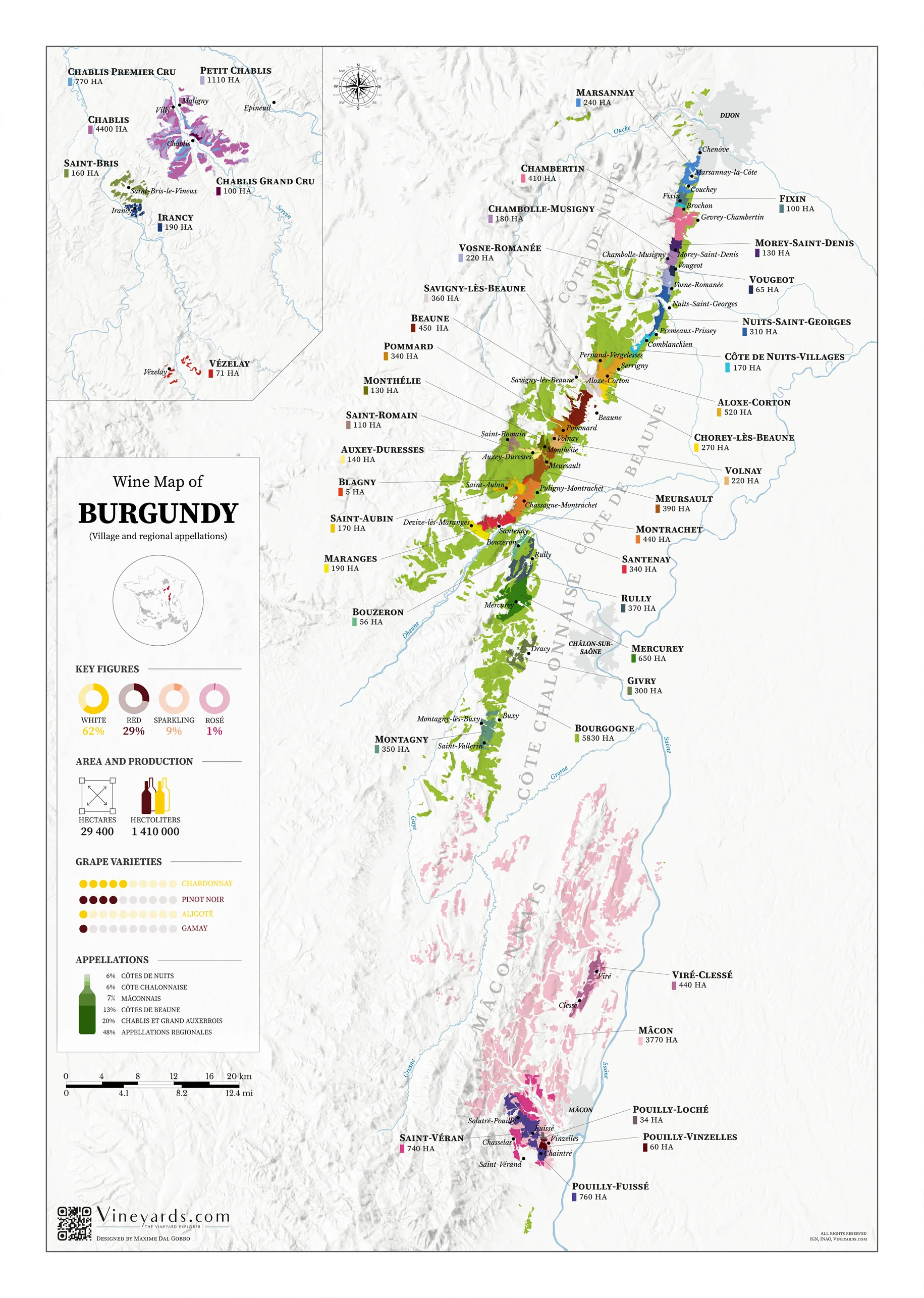
Red wines comes primarily from Côte D’or:
- Grape: Pinor Noir
- Two sub-regions:
- Côte de Nuits in the North
- Côte de Beaune in the South
- Within these sub-regions, there are many villages, each with their own appellation.
- Classification levels indicate where the wine comes from. Generally speaking, the higher the classification, the more sought-after the wine is.
- Régional (“Bourgogne”)—anywhere in Bourgogne.
- Village (“Gevrey-Chambertin”)—specific village.
- Premier Cru (“Gevrey-Chambertin 1er Cru”)—specific vineyard within a village, where the vineyard is classified as premier cru.
- Grand Cru (“Gevrey-Chambertin Grand Cru”)— specific vineyard within a village, where the vineyard is classified as grand cru.
Our Wines from Côte D’or:
- Bouchard Pere & Fils Gevrey Chambertin, 2020
- Domaine Seguin-Manuel Vosne-Romanee Aux Communes, 2022
- 600 meters away from Romanee-Conti vineyard, which produces the most expensive wine in the world.
- Bouchard Pere & Fils Pommard Premier Cru, 2016
- Should have developed tertiary aromas by now.
Questions:
- What do the bottle label indicate about the wine?
- Which primary aromas do you detect?
- Does any of the wines have secondary aromas? Which ones?
- Does any of the wines have tertiary aromas? Which ones?